Enterprise AI Agent Development: Stop Chasing Fragile Autonomy. Deploy Controlled Workflows.
As an enterprise AI agent development company, Botmartz engineers constrained, production-ready multi-agent systems that execute mission-critical business workflows. Deterministic LangGraph state routing, human-in-the-loop approvals, and rigid Pydantic schemas ensure every state-changing action is gated by verification.
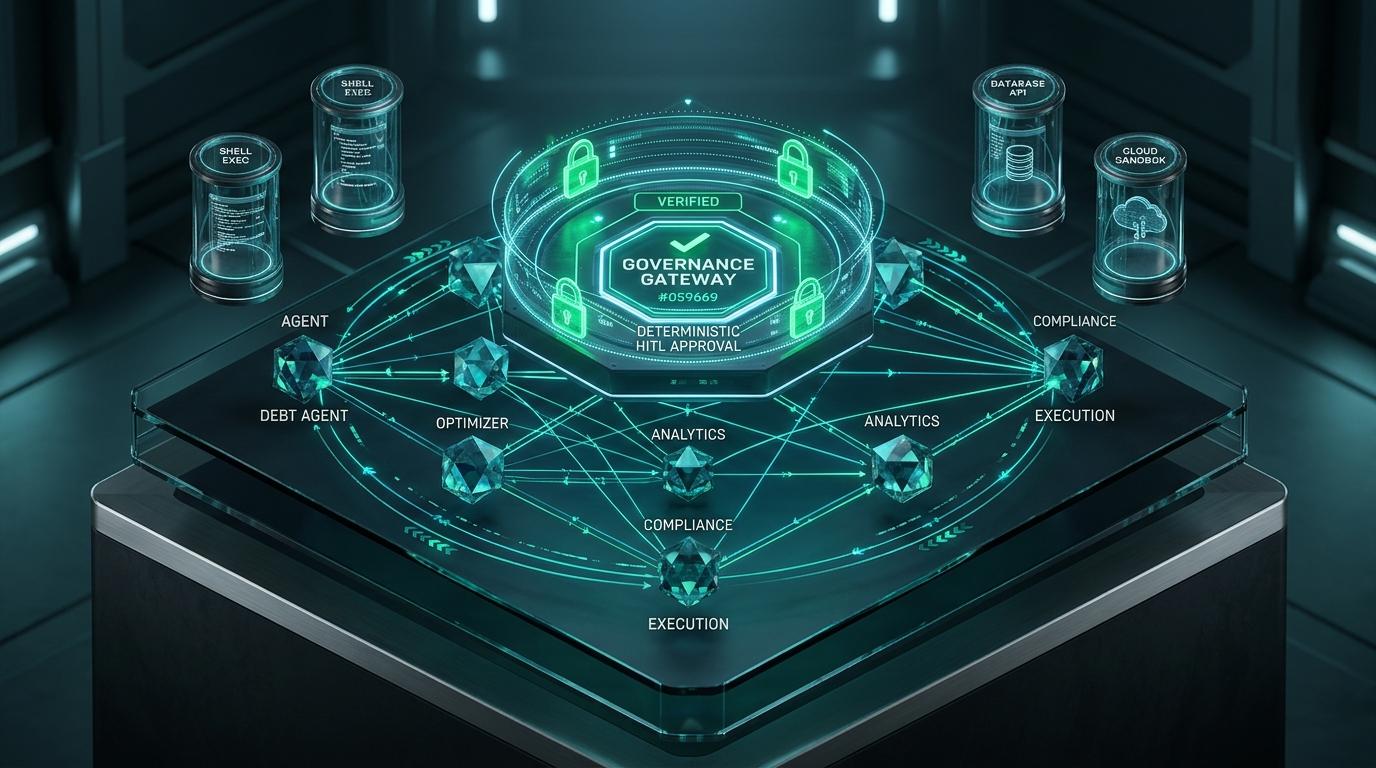
Why Most AI Agent Pilots Fail (And How We Engineer Control)
Most agencies build autonomous agents using simple prompt chaining. In production, these break down on edge cases, loop unpredictably, and take unverified actions that risk enterprise data and customer trust.
We engineer Constrained Agentic Workflows. Using state machines (LangGraph) and schema validation (Pydantic/Zod), we enforce deterministic execution paths, automated failure recovery, and mandatory Human-in-the-Loop (HITL) checkpoints for all state-changing actions.
Constrained LangGraph Execution & HITL Approval Gate
Test real enterprise scenarios. Experience state machine rollbacks, circuit breakers, and mandatory human authorization gates before records mutate.
Incoming Vendor Invoice: $42,500 from AvioCorp (Vendor ID #VN-8841)
Validating incoming payload against ERP Invoice Schema. Zero type drift allowed.
Queries PostgreSQL ERP ledger for PO #PO-99214 goods receipt matching.
Invoice exceeds automatic release threshold ($25,000). Pausing graph execution for Controller sign-off.
Executes atomic payment schedule write to SAP and writes SHA-256 hash to immutable audit log.
Governed Actions. Zero Runaway Loops.
Every agent is designed as a state machine with explicit failure transitions and rollback compensation.
Deterministic State Machines
We don't let LLMs guess execution paths. We use LangGraph state graphs to enforce rigid transition rules and state persistence.
Human-in-the-Loop (HITL)
High-stakes actions (sending emails, updating records, approving transactions) are paused for explicit human review via our console.
Strict Data Validation
Every input, intermediate state, and tool output is validated against rigid schemas (Pydantic/Zod) to prevent corrupt data propagation.
Secure Tool Calling & RBAC
Securely connect agents to your CRM, ERP, and internal databases with strict Role-Based Access Controls and token isolation.
3–6 Week Agent Production Roadmap
From strict boundary discovery to LangGraph state machine rollout with human-in-the-loop review consoles.
Workflow & Boundary Discovery
We define the exact boundaries of the agent, the APIs it can call, error conditions, and the human approval checkpoints required.
Single-Skill Agent MVP
We build a highly constrained agent state machine to execute one specific workflow flawlessly (e.g. claims triage or document synthesis).
Multi-Agent Production Scale
We scale the MVP into a multi-agent system where specialized agents hand off tasks to one another, featuring complete telemetry and telemetry tracking.
Mission-Critical AI Agent Implementations
Built with dual-key approval gates, state persistence, and automatic circuit breakers.
Automated Enterprise Creative & Catalog Intelligence
Multi-agent visual asset generation and catalog composition engine coordinating prompt expansion, image synthesis, and automated brand guideline validation.
Sovereign Real Estate & Community Operations (VelvetKey / HOA Connect)
Autonomous resident triage, maintenance dispatch, and automated financial double-entry bookkeeping operating within local, privacy-compliant agent boundaries.
High-Stakes Regulatory Document Intelligence (VisaDesk & CEQA)
Multi-document synthesis, cross-encoder reranking, and claim-level verification agents providing court-defensible legal and environmental citations in under 3 seconds.
Local Sovereign Agentic OS (In-House AIOS)
Air-gapped multi-agent operating system running locally on consumer hardware with zero telemetry leaks, local LLM orchestration, and deterministic SQLite/WAL persistence.
Governed AI Agents FAQ
Answers on infinite loop prevention, ERP tool calling permissions, and state persistence.
Q1:How do you prevent AI agents from going into infinite loops or taking wrong actions?
We engineer agents using explicit state graph topologies (LangGraph) rather than open-ended autonomous prompts. Every node has bounded transitions, schema-validated inputs/outputs, and maximum iteration ceilings. High-stakes actions trigger an automated pause state that requires human authorization through our console.
Q2:What systems and tools can Botmartz AI agents integrate with?
Our agents connect natively via secure REST APIs, webhooks, and database connectors into enterprise software including Salesforce, HubSpot, ClickUp, Slack, PostgreSQL, Snowflake, Jira, and custom ERP systems with strict Role-Based Access Control (RBAC).
Q3:What is your typical delivery timeline for an enterprise AI agent pilot?
A single-skill, high-precision agent MVP typically deploys in 3–4 weeks. Multi-agent systems with cross-tool handoffs and human review consoles take 6–8 weeks to harden and benchmark.
Upskill Your Engineering Team on LangGraph & FDE Architecture
Rather than outsourcing permanently, train your in-house engineers to build deterministic agent state machines, hybrid RAG with Reciprocal Rank Fusion, and private VPC vLLM inference under live mentorship from Soham Sharma.
Ready to Automate Complex Workflows?
Let’s map out the state machines, tools, and human checkpoints needed to bring your first AI Agent to production safely.
Configure Your Enterprise RAG Specification & Get the 2027 Production Blueprint
Stop guessing chunk sizes and reranker latency. Select your volume and deployment target to calculate production bounds and receive Botmartz's court-defensible architecture schematic.